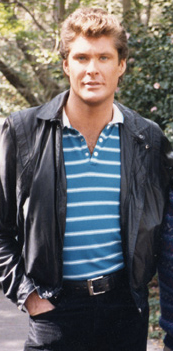
Do Germans love David Hasselhoff? Uncle John investigates.
David Hasselhoff is a TV actor, best known for starring in two huge hit shows in the 1980s, Knight Rider and Baywatch. But while he was lighting up American TV screens, Hasselhoff had a second career—as a pop singer…in Europe. Most Americans probably first found out about Hasselhoff’s musical career during the dismantling of the Berlin Wall in Germany in 1989. Hasselhoff was present in Berlin for some reason, performing a song appropriate for the event called “Looking For Freedom.”
The reason, which quickly became clear: David Hasselhoff was hugely popular in Germany. (It was sort of like how American comedian and director Jerry Lewis isn’t highly respected at home but it is beloved in France.)
Back in 1981, Atari was the world leader in video games. In 1983 Nintendo offered to sell Atari the licenses to their Famicom game system, but they couldn’t come to an agreement, so Nintendo decided to go it alone.
They renamed the American version the Advanced Video System (AVS) and in January 1985, introduced it at the Consumer Electronics Show in Las Vegas, one of the largest such trade shows in the world.
They didn’t get a single order.
Nintendo’s problem wasn’t so much that the AVS was a bad system, but more that the American home video game industry was struggling. After several years of impressive growth, in 1983 sales of video game consoles and cartridges suddenly collapsed without warning. Video game manufacturers, caught completely off guard, lost hundreds of millions of dollars as inventory piled up in warehouses, never to find a buyer. Atari’s loss of $536 million prompted Warner Communications to sell the company in 1984.
Mattel sold off its version, Intellivision, the same year and shut down their entire video game division. Many other companies went out of business.
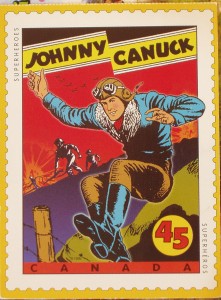
The original Johnny Canuck appeared in newspaper editorial cartoons in the 1860s. A working-class, tall-tale hero in the mold of Paul Bunyan, he sometimes appeared as a lumberjack, at other times as a farmer or a rancher. In 1942, in answer to the war and to the comics ban, the character received a reboot and was resurrected as a Nazi-fighting aviator and secret agent by 16-year-old Leo Bulche, who got the job after a chance encounter with the owner of Dime Comics. Later still, the lumberjack version of Johnny Canuck was adopted as the logo for the Vancouver Canucks, and he occasionally makes appearances on their uniforms on “retro nights.”
CAPTAIN CANUCK
Over the years, Captain Canuck has been the secret identity of three different Canadian secret agents: Tom Evans, Darren Oak, and David Semple. He wears a red-and-white costume based on the Canadian Flag, with a red Maple leaf on his forehead.
WOLVERINE
Wolverine was born in Alberta in the 1880s to the wife of a wealthy farmer and a groundskeeper named Logan, with whom she had an affair. Wolverine is a mutant who has retractable claws and regenerative powers that keep him from aging. In the late-20th century, Wolverine was a part of Canada’s Weapon X program, where his memories were wiped out and he had adamantium fused onto his bones, making him even stronger. A member of Marvel’s X-Men, Wolverine is regularly voted one of the most popular superheroes in the world.
As a teenager in Detroit in the 1980s, Robert Ritchie deejayed and breakdanced at parties in exchange for free beer. He says he often heard someone in the mostly African-American crowd remark, “Look at that white kid rock.
BRUNO MARS
The singer’s real name is Peter Hernandez. At age two, his father, a wrestling fan, started calling him “Bruno” because he resembled pro wrestler Bruno Sammartino. In 2003, when he moved from his birthplace of Hawaii to Los Angeles to make it as a singer, he added “Mars” because “a lot of girls say I’m out of this world.”
SLASH (Guns N’ Roses)
Growing up in Los Angeles, Saul Hudson’s best friend was the son of character actor Seymour Cassel (Faces, Rushmore). The actor nicknamed Saul “Slash” because, as Slash said in his memoir, “I was always in a hurry, hustling whatever it was I was hustling, and never had time to sit and chat.
John Lennon and Paul McCartney were very hot and cold with each other after the Beatles broke up in 1970—they’d snipe at each in the press sometimes, while other times, they were friendly. For example, the night Lorne Michaels famously made his offer to pay the Beatles $3,000 to reunite on Saturday Night Live, Lennon and McCartney were actually watching the show, together, in Lennon’s apartment in New York, and almost went down to the show. But they only ever recorded together again once. In March 1974, Lennon had temporarily split with his wife, Yoko Ono, and had moved to Los Angeles. On March 28, he was at a Burbank studio producing Harry Nilsson’s Pussy Cats. That’s when Paul and Linda McCartney dropped by, unannounced. Lennon greeted McCartney by saying, “Valiant Paul McCartney, I presume?” McCartney responded, “Sir Jasper Lennon, I presume.” It was an inside joke—the lines were an exchange from a 1962 Beatles TV special. Before long, a jam sessions was underway—Lennon on guitar and lead vocals, McCartney on drums and harmonies. (And another drop-in, Stevie Wonder, played piano.) A bootleg of the session didn’t surface until 1992 under the title A Toot and a Snore in ’74, because Lennon repeatedly keeps asking for a “toot”—cocaine. The 26-minute recording is mostly chatter, but Lennon and McCartney play a bit of “Stand By Me” and “Sleepwalk.”
DRUM. This word comes from the Middle Dutch term tromme, which is believed to be onomotopaeic in origin. It became the English drum, as a noun, in the early 1500s.
PSALM. The old Greek verb psallein meant “to pluck a stringed instrument.” That became psalmos, which meant something along the lines of “the sound of a harp,” and then came to mean a song, especially a sacred song of the Jewish tradition, as in the psalms of King David.
DOO-WOP. This music style, begun in the 1950s and characterized by rich vocal harmonies, was named for the nonsense syllables sung behind the lead. First song that actually had the phrase “doowop” in it: “When You Dance,” a 1955 hit by the Turbans. It didn’t become an official word, however, until 1969.
HOTEL: The Old Jail LOCATION: Mount Gambier, Australia DESCRIPTION:The Old Jail offers the accommodations—and decidedly spooky atmosphere—of a huge, 19th-century rural prison. The hotel was once the South Australian State Prison, which operated from 1866 to 1995. Not much has changed when it was converted into a hotel. Showers are still communal and best are still cots, but the cell doors can now be opened from the inside. “Inmates” sleep four to a cell (either with strangers or family) or can pay double for a private, two-person suite.
Authors or publishers have a lot of reasons for inserting the occasional fake fact in an otherwise rigorously researched reference book—they may be laying a “copyright trap” to see if anybody uses their book without giving credit. Or sometimes they just do it because it’s fun to trick people.
FAKE SONG. Joel Whitburn compiles music chart history books based on Billboard’s many charts, which go back to the 1930s. A number of his books note a very obscure song called “The Song of Love” recorded by bandleader Ralph Marterie. Whitburn says the song debuted and peaked at #84 on the pop chart for the week of December 26, 1955. However,Marterie never recorded “The Song of Love.” Nor did Billboard put out a chart the week of December 26, 1955. Whitburn included it to track just how far and by whom his research goes. (Ralph Marterie, however, was a real bandleader and made several recordings in the 1950s.)
• The park has a large security force. It’s mostly undercover…but there are more Disney security officers than there are police officers in the adjacent city of Anaheim.
• Employee slang for being a costumed character: “duck duty.”
• In the Toy Story movies, the toys would all freeze and drop to the ground when their human owner Andy was approaching. If you yell “Andy’s coming!” when costumed Toy Story characters are out and about…they will freeze and drop to the ground.
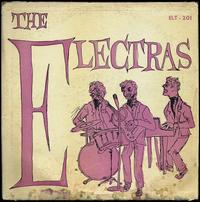
The Electras were one of thousands of garage rock bands formed by American high school kids in the early 1960s. More than 13 different guys played in the Concord, New Hampshire, band, all attending St. Paul’s School, an all-boys academy. One of the longest-serving members was bassist, future senator, current Secretary of State, and 2004 presidential candidate John Kerry.
In late 1961, the Electras recorded an album of ten songs, mostly covers of well-known rock and pop songs like “Sleepwalk” and “Summertime Blues.” Only 500 copies were ever pressed, intended for friends and family—in 2004 a copy sold for more than $2,500 on eBay. That was the only thing the Electras ever recorded…until former band member Larry Rand discovered a reel-to-reel recording of the band playing live at a dance at the all-girls Concord Academy in October 1961.
In 1983, George Lucas released Return of the Jedi, the final movie in the Star Wars trilogy, one of the most financially successful and popular film series of all time. But how would he follow it up? In 1985, Lucas announced that he was producing a movie adaptation of the Marvel Comics cult comic book Howard the Duck.
Today, Marvel movies are hot Hollywood properties—this year’s Iron Man 3 and last year’s The Avengers are among the top 20 highest-grossing films of all time. But the very first Marvel property to be made into a movie was Howard the Duck. It was about a humanoid duck from outer space living on Earth, and he was crass, rude, and sexist. Lucas had been trying to get a movie of it made since the mid-’70s, but no studio was interested. After the success of Star Wars, Lucas could make whatever he wanted and Universal readily agreed to distribute Howard the Duck. They needed a big movie for the summer of 1986, and they were still smarting from passing on the Indiana Jones movies, which Lucas had produced and which were distributed by rival Paramount.
From the mid-‘90s to the early 2000s, before cell phones became ubiquitous, the best, cheapest way for parents to keep track of their teenagers, and for teenagers to keep track of each other, were beepers, or pagers. Here’s how it worked: From any phone, you’d dial a friend’s beeper number. They’d receive a simple text message on their pager’s display: your number, and any other numbers you wanted to include. For example: “911” would mean “call me right now – it’s an emergency.”
From that spawned a new language of beeper codes. Those little coded messages became both a shorthand, a way to actually communicate via the very limited capacity of a pager, and also a way to shut out uninformed, nosey parents. Here are some of those old beeper codes. (While some of them make perfect sense, others seem quite random. But who can understand these kids today…or yesterday?)
He-Man and the Masters of the Universe was the bestselling “action figure” line of the 1980s. From 1982 to 1988, when the toys were produced in conjunction with the Masters of the Universe cartoon series, Mattel sold $1.2 billion worth of “He-Man,” “Skeletor” and dozens of other MOTU action figures. But apparently there was room for more. In 1986, the Masters of the Universe Magazine held a “Create-a-Character” contest. The magazine’s editors would chose five semi-finalists and readers would vote on the winner. The grand prize: a $100,000 scholarship, a trip to Disneyland, and, perhaps best of all, Mattel would make the winning character into an action figure.
The contest winner was 12-year-old Nathan Bitner for his character, “Fearless Photog.” Photog had a camera for a head and used his camera-head to take “photos” of his enemies, which would drain their strength and transfer their image to his chest plate. Bitner got his scholarship and his Disney vacation, but unfortunately, Mattel never followed through with the rest of the bargain. Fearless Photog was never manufactured. (Interestingly, Bitner went on to design other sci-fi characters—in the 1990s, he worked at Bungie, the video game company that developed the five-million-selling Halo.)
In 2011, the musical Spider-Man: Turn Off the Dark debuted on Broadway and made headlines. Not because it was really good, but because it was an absolute disaster. Actors in the stunt-heavy show routinely suffered injuries, critics savaged it, audience members asked for their money back, and the producers and creators sued each other. Eventually, the lawsuits were settled, safety measures were introduced, the script was rewritten mid-production, and two years later, the show is still running (to packed houses). But it’s amazing that it ever even made it to Broadway, after the failure of a proposed Batman musical.




 Do Germans love David Hasselhoff? Uncle John investigates.