
Weird Holiday: The Trouble With Sinterklaas

Sinterklaas is one of the world’s most controversial holidays
but you’ve probably never heard of it.
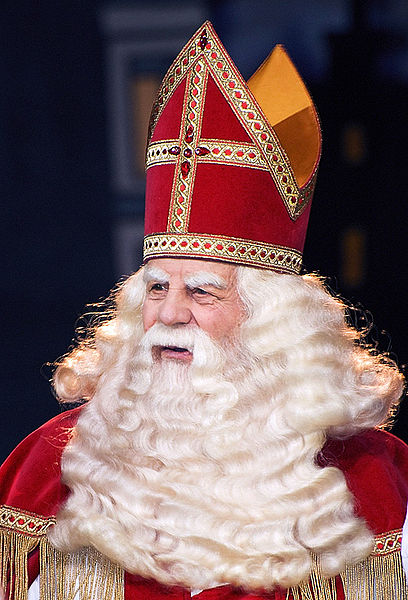
sinterklaasOne of the ways that Santa Claus is able to travel all around the world on Christmas Eve is by cutting corners. For instance, he doesn’t widely visit homes in Europe’s “low countries.” Instead, a much skinnier gift-giver covers those regions. His name is Sinterklaas (or just “Sint”). He delivers presents on December 5, on a holiday also called Sinterklaas, to all the good boys and girls…who live in Belgium and the Netherlands.

Instead of a flying sleigh pulled by reindeer, Sint rides a white horse to make his toy deliveries. And instead of spending the offseason at the North Pole, Sint is said to live in Spain. And instead of arriving on a float at Macy’s Thanksgiving Day Parade to herald the beginning of the Christmas season, Sint departs Spain on a steamship and shows up at various celebrations in the middle of November. And no milk and cookies for Sint, please—Belgian and Dutch kids leave Sint’s horse a carrot in their shoes.

Ford Mustang: Car of the ’60s

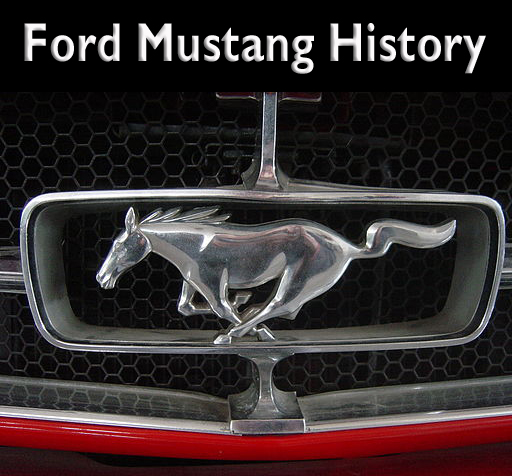
With the international reveal of the sixth generation Mustang on its 50th anniversary, we revisit this iconic car’s history. The original Ford Mustang, a sporty car for “everyman” introduced in 1964, is now a symbol of the entire decade. Here’s a bit of its history.

ford mustang historyThe Mustang was the most successful new car ever introduced by the American auto industry. But in terms of the ’60s, it was more than a car. Its popularity was an expression of the simple truth of the decade—that everyone wanted to look, feel, and act young.

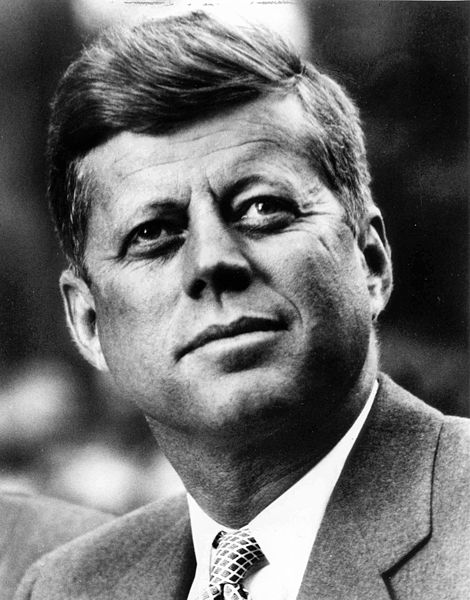
5 Quick Facts About John F. Kennedy

Some things you probably didn’t know about the 35th president,
who was assassinated 50 years ago this month.

Facts about John F. Kennedy• It’s political lore that John F. Kennedy won the 1960 election on the strength of the first-ever televised presidential debates: Kennedy appeared calm and collected, and wore makeup to look good on TV, while his opponent, Richard Nixon, seemed nervous and sweaty. Kennedy may have won the image game, but the debates didn’t hand him the keys to the White House. Gallup polls throughout 1960 show a very close race…and so did the outcome. Kennedy beat Nixon handily in the Electoral College (303 to 219), but got just 112,000 more votes, out of 68 million total.

The Curious History of “666”

Even if you aren’t into heavy metal, you probably know that “666” is a number associated with evil. How come? The devil is in the details. Here is a history of 666.

history of 666The Book of Revelation was written in Greek sometime between 70 and 95 A.D., by an author known only as John. While its most commonly associated with scary, cryptic, or apocolyptic imagery, it’s really only the 13th chapter of Revelation where that’s present. It begins with a letter to the reader, then describes cataclysmic events of the end times John says he saw in a series of visions.

It’s in Revelation (13:8) where “666” is mentioned—the only time in the Bible: “Here is wisdom. Let him that hath understanding count the number of the beast: for it is the number of a man; and his number is Six hundred threescore and six.” Doing a bit of quick math, in which a score is 20, the number adds up to 666. Whoever is represented by this number then, the text indicates, is pure evil.

Weird Holiday: St. Martin’s Day

The holiday may not be familiar to you, but the customs certainly are.

Basic CMYKMartin of Tours seemed like a decent guy. Legend has it that in the 4th century, he gave up his job as an elite soldier in the Roman army to become a priest after helping out a beggar one night. He ultimately became a bishop, and a pacifist devoted to spreading peace, love, (and Christianity) across western Europe.

He was sainted shortly after his death, and his feast day is November 11, marking the day he was buried in 397. Though obscure in the U.S., St. Martin’s Day is widely celebrated in Europe, making it one of the oldest continuously observed holidays in the world.

The customs vary by location, and many are reminiscent of American customs for other holidays:

• In Belgium and the Netherlands, St. Martin’s Day is celebrated much more like Halloween. Children make paper lanterns and, once its dark, go door-to-door in search of candy. Instead of saying “trick or treat,” they sing songs or recite poems about St. Martin. In some communities, the search for candy begins at a local church and the kids are marched through the streets with a horseback actor dressed as Saint Martin leading the way. Afterward, there’s often a bonfire in a large public square and everybody eats pretzels.

Mysteries of the Gas Station: Solved!

The answers to those things you think about while you wait for your tank to fill up.

Why are gas prices listed with a “9/10” afterward?

3d render of gas stationBecause they make more money that way. The price for a gallon of gas listed, $3.49 9/10, is rounded up to the next penny. But most customers don’t pay any attention to that fraction, focusing instead on the standard three-digit price, falling for a classic psychological trick that makes customers think they’re paying slightly less for something than they really are. It’s the same psychology behind why things that cost 99 cents “feel” so much cheaper than something that costs $1.

The fractional pricing practice began during the Great Depression. To save money, people were driving less, and the demand for gasoline. Gas station chains introduced premiums to attract customers, such as free glasses, candy, and ashtrays, for example. Another way a gas station could differentiate itself from the competition: lower prices. Undercutting the other guy by even a fraction of a cent was enough to lure customers. The 9/10th became permanent in the 1970s. During that decade’s oil crisis and subsequent gas shortage, the federal government stepped in to regulate gas prices, setting them with elaborate but precise formulas, which often ended in 9/10ths. The idea simply became a part of American life after that.

It’s Devil’s Night!

Today is Halloween, but the tricks started yesterday with Devil’s Night.

Falling on October 30th, Devil’s Night is also known as “Mischief Night,” “Cabbage Night,” or “Hell Night.” No matter what it’s called, it’s probably the nastiest holiday in Europe and North America.

Serving as a mean-spirited counterpart to the more innocent traditions of Halloween, Devil’s Night is celebrated by pulling pranks instead of “tricks.” It’s also a lot newer than the medieval festivals that gave way to Halloween. Devil’s Night began in 1790 as Mischief Night. A headmaster of St. John’s College at Oxford put on a play, followed by an “Ode to Fun,” which encouraged students to play pranks (like throwing cabbages at houses). Students obliged and it became an annual tradition…in early May. In the 19th century, the night switched to the evening prior to Guy Fawkes Day, and finally settled on October 30th around the turn of the 20th century, which is also when the holiday spread to the U.S., particularly Detroit.

devil's nightTypically, the pranks are as harmless as covering a neighbor’s tree in toilet paper or smashing a few pumpkins. Things started getting out of hand in the ‘70s. In Detroit, Devil’s Night is marked by acts of major vandalism, property damage, and even arson. In 1984, for example, more than 800 fires were reported.

History of Halloween

Halloween is Uncle John’s favorite holiday. Why? It’s the one day of the year he looks “normal!” Here’s a quick history of Halloween.

History of Halloween

ANCIENT ORIGIN

The ancient Celts in the British Isles celebrated their new year on November 1. Their New Year’s festival was called Samhain (pronounced sow-wen), which means “summer’s end.” Early Christians adopted the festival in the seventh century A.D., making November 1 a celebration of saints and martyrs—hence the name All Saints’ Day or All Hallows’ Day. (Hallow comes from an Old English word meaning “holy.”) The night before All Saints’ Day was known as All Hallows’ Even (evening)— which was shortened to “Hallowe’en.”

ANCIENT MYSTERY

What’s Halloween’s connection to ghosts and costumes? No one’s sure, but historians offer these three possibilites.

Theory #1: The Ghosts Are Hungry!

On All Hallows’ Eve, evil spirits roamed the Earth in wild celebration, ready to greet the arrival of “their season”— the cold dark winter. And just for fun, they liked to frighten mortals. One way for scared humans to escape the demons was to offer them food and sweets. Another way was to dress up like spirits and roam around with them…hopefully going unnoticed. “That is what the ancient Celts did,” explains Francis X. Weiser in The Handbook of Christian Feasts and Customs, “and it is in this very form that the custom has come to us.”

The Rarest “45” Of All Time

How a forgettable pop song became a priceless collector’s item—“American Memories” is the rarest 45 of a song to have ever made the Billboard pop chart.

Richard Doyle was a standup comedian from Los Angeles who hosted a show on local TV called Comic Talk, where he interviewed other comedians that were part of that city’s rising comedy scene. Doyle was also a musician—in 1973, under the name “Shamus M’Cool,” his Christmas novelty song “Santa’s Little Helper, Dingo” hit #11 on Billboard’s seasonal holiday music chart.

That was the only musical success Doyle had had, but in 1981, he decided to revive his musical career, as well as the “Shamus M’Cool” stage name. He recorded a country rock song called “American Memories,” which wasn’t a comic novelty song at all—it was a look back on triumphant, proud memories in American history. (The B-side: “American Humor,” six-minutes of Ronald Reagan jokes from Doyle’s comedy act, recorded live at the Playboy Club.)

Right Protest, Wrong Place

This is America, and you have the right to voice your displeasure with someone or something.
Just make sure you address the correct people.

Return to SenderBoo, Miley Cyrus!

The most controversial moment at the 2013 MTV Video Music Awards: a performance by Robin Thicke and former child star Miley Cyrus. Cyrus, dressed in little more than a bikini, “twerked” with Thicke—suggestively rubbing up against the singer. The FCC received 161 complaints about the broadcast, the most regarding a single event since Janet Jackson’s 2004 Super Bowl “wardrobe malfunction.” A few complaints: “She has the vast majority of her butt cheek hanging out of her bikini,” “Obscene, slutty, indecent,” and “Miss Milly Cyrus should be fined and jailed for performing such sexually provocative material on TV.” Did the FCC punish MTV, Cyrus, Thicke, or cable TV providers? Nope. The FCC doesn’t have any jurisdiction over cable TV—only over-the-air, free, broadcast TV.

Hooray, Paula Deen!

In a lawsuit filed earlier this year against TV chef and cookbook author Paula Deen, it was alleged that Deen had, many years ago, uttered racial slurs and racist comments. Deen admitted it, but denied she was a racist. Nevertheless, Food Network announced they wouldn’t renew her contract. Deen’s most devoted fans, however, thought that she was being unfairly maligned, and sent thousands of emails and phone calls to express their support. Except that a lot of those messages were sent not to Deen’s former employer, Food Network, but to The Food Channel, a Missouri production company that makes cooking segments and shows syndicated to TV stations around the country. “We’ve been getting your emails. Your phone calls. We get that you are mad about her contract not being renewed. The problem is, you are calling and writing the wrong people,” the Food Channel said on its website.

It’s National Boss Day

Today is your day to shine, brown-nosers!

National Boss DayLooking for an excuse to cozy up to your superiors and put yourself in the front of the line for that promotion and/or make your coworkers look bad? Then get ready to celebrate National Boss Day. It’s actually been around for over 50 years, but is not widely celebrated for reasons you can probably figure out (it involves buying your boss a present, so there’s one factor).

The person behind this holiday did have good intentions. National Boss Day was created in 1958 by Patricia Bays Haroski, an employee at a State Farm Insurance branch in Deerfield, Illinois. She registered the holiday with the U.S. Chamber of Commerce in order to not only honor all the hard-working managers out there but to also help improve relations between them and their underlings. (And probably, we’re guessing, to impress her boss.)

Weird Holiday: It’s German Unity Day

Get a little closer…the German way. It’s German Unity Day.

German Unity DayJust about every country on the planet has some kind of national day. These public holidays involve citizens celebrating their country’s heritage and traditions. The observance date is often placed on a day that the country became independent of another country: America, for example, has Independence Day (July 4th), Canada has Canada Day (July 1st), and Macedonia has Den na Nezavisnosta (Sept. 8th). And these holidays almost always involves fireworks. Why? Because everybody loves fireworks.

Germany has a national holiday, too, but unlike those other countries, they celebrate unification, not separation. Tag der Deutschen Einheit, literally “German Unity Day,” falls on October 3rd and observes the day in 1990 that West Germany and East Germany combined back into a single Germany after more than three decades of separation.

RIP Tom Clancy

Best-selling author Tom Clancy passed away yesterday at the young age of 66. Here is a look back at how The Hunt for Red October became a best-selling thriller.

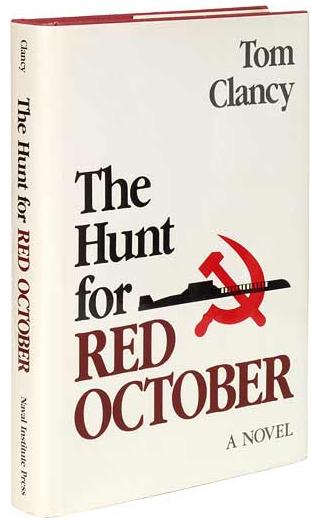
Tom Clancy The Hunt for Red OctoberIn 1984, a Maryland insurance broker named Tom Clancy wrote The Hunt for Red October, a naval thriller about a Soviet submarine captain who tries to defect to the United States.

Clancy, a military buff, had never published a book before—his only “author” credits were for a three-page article on the MX missile, and a single Letter to the Editor. And the Naval Institute Press had never published a work of fiction. But they liked Clancy’s manuscript, so they bought it and printed 14,000 copies.

A Friendly Hand: President Ronald Reagan read The Hunt for Red October after it was recommended to him by a friend.. .and that’s when a reporter just happened to ask what he was reading. Reagan praised the book as “the perfect yam” and “non-put-downable.”

That did the trick. The Hunt for Red October, which until then had received little attention and was selling slowly, shot up the bestseller lists. Ultimately, it sold more than 5.4 million copies, setting Tom Clancy on a course to become one of the best-selling authors of the 20th century.

Article first published in Uncle John’s All-Purpose Extra-Strength Bathroom Reader.

The Search for the National Geographic Afghan Girl

This October marks the 125th anniversary of National Geographic. To celebrate, we take a look at the most famous photographs of the 20th century: the National Geographic Afghan Girl. This story was originally published in Uncle John’s Slightly Irregular Bathroom Reader.

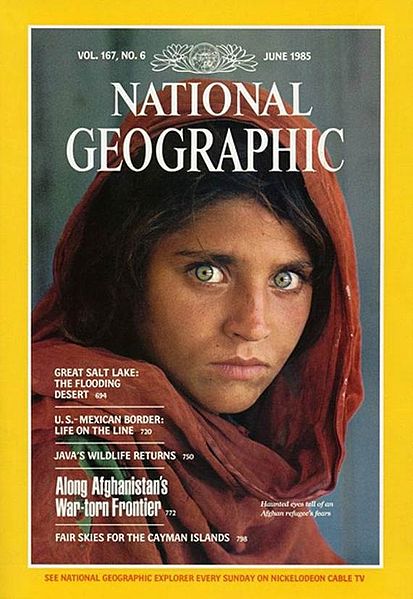
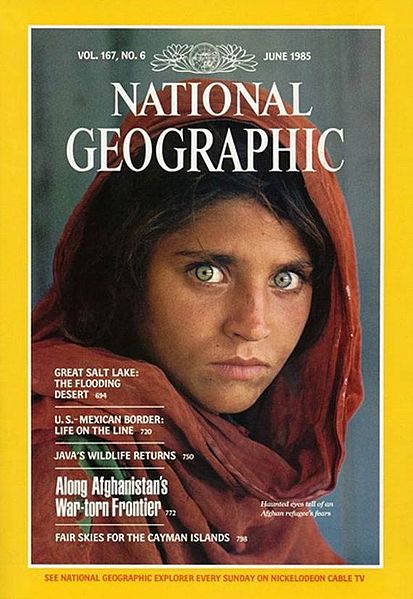
national geographic Afghan girlSNAPSHOT

In December 1984, a National Geographic photographer named Steve McCurry visited the Nasir Bagh refugee camp on the Afghan/Pakistan border while covering the war between the Soviet Union and Afghanistan. While there he snapped a photograph of a 12-year-old girl with haunting blue-green eyes. The girl had been living in the camp ever since Soviet helicopters had bombed her village five years earlier, killing both her parents.

McCurry didn’t have a translator with him that day, so he never got the girl’s name. But the photograph, which appeared on the cover of the June 1985 issue, went on to become the single most recognized photograph in National Geographic’s 125-year history and one of the most reproduced images in the world.

History of Nintendo

Hiroshi Yamauchi, who ran Nintendo for more than 50 years, passed away this morning. He played a great role in bringing the game consul to the American marketing and in the creation of Super Mario, Donkey Kong and Zelda. To take a look back at his life and his role in the company, here is an overview of the history of Nintendo (Part I), first published in Uncle John’s Ahh-Inspiring Bathroom Reader.

History of NintendoNO SALE

Back in 1981, Atari was the world leader in video games. In 1983 Nintendo offered to sell Atari the licenses to their Famicom game system, but they couldn’t come to an agreement, so Nintendo decided to go it alone.

They renamed the American version the Advanced Video System (AVS) and in January 1985, introduced it at the Consumer Electronics Show in Las Vegas, one of the largest such trade shows in the world.

They didn’t get a single order.

Nintendo’s problem wasn’t so much that the AVS was a bad system, but more that the American home video game industry was struggling. After several years of impressive growth, in 1983 sales of video game consoles and cartridges suddenly collapsed without warning. Video game manufacturers, caught completely off guard, lost hundreds of millions of dollars as inventory piled up in warehouses, never to find a buyer. Atari’s loss of $536 million prompted Warner Communications to sell the company in 1984.

Mattel sold off its version, Intellivision, the same year and shut down their entire video game division. Many other companies went out of business.

Weird Holiday: Stay Away From Seattle Day

How to celebrate: visit Seattle. Wait, no…do not visit Seattle.

stay away from Seattle DayIf you were thinking of visiting the ancestral homeland of Starbucks, grunge music, and Fremont Troll on September 16, you’re going to have to change your plans. That’s because that day is Stay Away From Seattle Day.

Believe it or don’t, this strange “holiday” is real, and actually celebrated by many residents in Seattle, America’s rainiest big city. Much like the citizens of its almost-as-rainy and insular rival city of Portland, Seattleites love sharing their city and economy with visitors…but they love them even more when they leave.

Poet James McIntyre: The Chaucer of Cheese

Raise your hand if you like cheese! Wow…if we are counting correctly, that’s millions and millions of people. Poet James McIntyre loved cheese. Here is his story, as published in Uncle John’s Funniest Ever Bathroom Reader.

The Chaucer of Cheese

Have you heard of one James McIntyre?
His unusual verses set the world afire.
Think of this while eating your Cheerios:
In the 1800s, he was the bard of southwestern Ontario. His work is published this day still,
If you read his poems, they’ll make you ill.

The Chaucer of Cheese: Poet James McIntyreABARD IS BORN

James McIntyre (1827–1906), known to his admirers as the “Chaucer of Cheese,” was born in the Scottish village of Forres. He moved to Canada when he was 14 and lived most of his life in Ingersoll, a small town in Ontario, where he worked as a furniture and coffin maker. But what earned him his reputation was his hobby—writing poetry. McIntyre wrote poems on a variety of topics: He described Ontario towns, saluted his favorite authors, and sang the praises of farming and country life. He even composed tributes to his furniture.