

A Weird Invention: Graphene

Imagine a smartphone as thin as a sheet of paper. Or after folding up your laptop…you roll it up and put it in your pocket. Amazingly, these kinds of products may be available within the next decade, thanks to some scientists in Europe hard at work developing an amazing new material called graphene.

Not only is the better-than-Flubber substance flexible and transparent, it can conduct electricity. And a sheet of graphene is only one atom thick—which means it’s actually hard to detect with the human eye. When stretched out, the material is tougher than steel and harder than a diamond. Along with featherweight phones and computers, it may one day be used to create interactive newspapers, much like the ones seen in sci-fi movies, such as Minority Report.

The Last Telegram

Here at the BRI we love to write about technology that was once cutting-edge,
and has now become obsolete and vanished from the scene. But we
seldom get an opportunity to witness the actual departure.

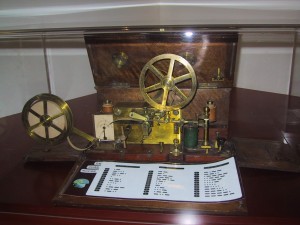
Last TelegramIn less than a week, the last telegram will be sent. The telegraph was the world’s first mass communication tool. First developed in the 1840s, sending series of electric pulses in Morse code (different combinations of pulses that corresponded to letters of the alphabet) along long stretches of electrical wire made instant communication a reality. The first telegram, sent on May 24, 1844, read, “WHAT HATH GOD WROUGHT?”

A Weird Invention: The Electronic Nose

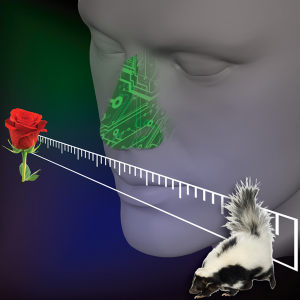
The Electronic NoseOne of the most talked about public pranks last April Fools Day was Google’s announcement of a new service called Google Nose, a tool that would let users search the Internet for smells. It was a joke, of course. But while online smell searching isn’t real, artificial noses are quite real. A California company called Cyrano Sciences is working on a prototype electronic nose that will recognize a preprogrammed array of scents. The company claims their “nose” could help supplement the limited capacity of the human nose. Dangerous, undetectable gas leaks could be picked up by an artificial nose, for example. It could even help doctors diagnose pneumonia and other maladies with distinctive smells. An earlier model, the Cyrano 320, a “portable electronic odor detector” has been used in the food and chemical industries since 2000. NASA also uses a similar device to track down problems on the International Space Station.

Want more weird inventions? Check out our latest book, Uncle John’s Bathroom Reader Weird Inventions.

Lorikeets and the Upchuck Thing

BRI Thom here, still on assignment in Australia (they told me it was only going to be two weeks!), with a quick note.

Four lorikeets have been coming to our veranda the last few days. We give them apple slices – they make a big mess eating them up.

Here are two of them, surrounded by described mess:

They all look pretty much the same, but while two of them will grab apple right out of your hand (and sit in your lap to eat it, if you let them, as we’ve happily learned in the past), two of them seemed very shy and skittery.

Just found out why:

A Weird But Great App: No More Kissin’ Cousins in Iceland

iceland cousins appThe United States is a melting pot. More than 300 million people live here, and most of us are either immigrants from another nation or the descendants of immigrants who came here within the last 200 years or so, from all over the world. The tiny European island of nation of Iceland is not quite so diverse. Distant and remote from mainland Europe, the country hasn’t expanded its genetic pool much over the last millennium. Result: All 300,000-odd residents of Iceland are related to each other.

The government of Iceland has intricately detailed its national genealogy, setting up a database that lists more than 720,000 people born in Iceland, including 95 percent of everyone born there since 1703, but going back 1,200 years. For example, everyone in Iceland—everyone—is related to a man named Jon Arason, who died in 1550.

With everyone related, that makes dating a little awkward—nobody wants to date their first cousin. Your eighth cousin? Well, that might be okay, but first cousin? Gross. That’s why an Icelandic computer programmer named Arnar Freyr Aoalsteinsson developed an app called IslendingaApp. Essentially an interactive version if the Icelandic genealogical registry, two people who have the app tap their phones together, and the app will tell them how closely they’re related. The app’s slogan: “bump the app before you bump in bed.”

**********************************

Looking for a Father’s Day gift? Look no further. Our Father’s Day Sale is in full swing. 30% off the entire store and FREE shipping on order of $35 and more. Go directory to our store.

A Weird But Great App: No More Spoilers on Twitter!

Tired of spoilers on online? What you need is a ‘No More Spoilers on Twitter’ app! Gone are the days of watching a TV show on the channel it airs at the time it. Most American homes now have some form of “time shifting” solution when it comes to TV, from the good old VCR to digital video recorders like TiVo to watching the shows online, either a couple days later via Hulu or a couple of months (or years) later in season-long viewing binges on Netflix.

A diehard fan of a show will watch it as soon as possible—when it airs—and many of those fans like to share their thoughts online, while it airs. So if you’re not going to get around to watching Mad Men the night it first airs, you’d better not go anywhere near Twitter. Mad Men fans will discuss plot points, twists, and, to use the parlance of the Internet, “spoil it.”

No More Spoilers On Twitter AppBoston teenager Jennie Lamere loves to use Twitter to connect with her friends and follow celebrities, but she hated how she would often inadvertently find out the results of her favorite show before she watched—the reality program Dance Moms. So for a student-computer-programming contest, she designed a Twitter application called Twivo. The program works like this: You install it and tell it what shows you don’t want to know anything about. Twivo then blocks all references to the show on your Twitter feed—the text is blacked out—no more spoilers on Twitter. Lamere won the contest; the app may be available to the general public in just a couple of months…hopefully before Breaking Bad starts up again.

Making the Most Out of Kickstarter: How Do I Land?

How Do I LandThe “crowd-funding” website Kickstarter can be used for a lot of things. For example, Rob Thomas, creator of the cancelled TV show Veronica Mars, raised enough money this spring (more than $3.5 million) to make a follow-up movie.

Or it could be used to fund expensive, elaborate pranks. Last January, comedian Kurt Braunohler (best known as the host of IFC’s Bunk) put up a plea on Kickstarter to raise $4,000. Goal: to“hire a man in a plane to write stupid things with clouds in the sky.” In other words, to skywrite jokes.

Braunohler successfully raised $6,820—way more than his $4,000 target. And earlier this month he hired a skywriter, who wrote this amusing message in the skies over Los Angeles: HOW DO I LAND?


The World’s Smallest Movie

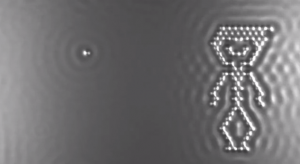
world's smallest movieThis tiny film doesn’t feature any big stars like Brad Pitt, or even any littler stars—because there literally wasn’t enough room for them. Instead, A Boy and His Atom stars, amazingly, just a few microscopic particles. Guinness World Records has declared the stop-motion-animated short film “the world’s smallest movie.” The 90-second film consists of a “boy” bouncing an atom-sized ball while dancing and jumping around. There’s not much of a plot but given the methods involved, it’s pretty incredible.

IBM scientists created the film with a “scanning tunneling microscope” that manipulated a few dozen carbon atoms placed atop a copper surface. First they had to chill the microscope to just above absolute zero (-450° F) because at a higher temp, the “excitable” atoms would have ignored their stage directions.

The World’s Most Frightening Search Engine: Shodan

ShodanYou probably use Google, Bing, or Yahoo! to find things on the Internet, but have you ever heard of Shodan? Like the competition, it can be used to search the web for celebrity gossip and Game of Thrones spoilers, but unlike the competition, Shodan specializes in helping hackers to navigate the Internet’s back channels.

Free National Park Week, 2013

An Uncle John’s Bathroom Reader PSA: Every National Park in the U.S. has free admission this coming week!

From our National Park Service:

Did you know that National Park Week is April 20-28, 2013?

Did you know that there are 401 national parks? That they include seashores, battlefields, historic homes, archeological sites, and spectacular natural areas?

Did you know there is at least one national park in every state? …

You can plan your visit by what you want to do, or where you want to go … or you can browse our event calendar and check out the special programs offered that week. Also, from Monday through Friday, April 22 to 26, every national park will have free admission!

Free admission—that’s a big savings if you go to a park with your family or a group of friends, just to note.

And if you need a bit of a guidebook—we have a whole book on National Parks! (No way! What a coincidence!)

Some of the scintillating subjects you’ll find in this volume:

Big Noise, Little Bug: The Cicadas are Coming!

As the East Coast prepares for the cicadas invasion due sometime in the next month, we dig in our vault to find some more information about this tiny, yet noisy bug. The following article is from Uncle John’s Fully Loaded Bathroom Reader.

BIG NOISE, LITTLE BUG

Cicadas are the vuvuzelas of the insect world. (What are vuvuzelas? Those loud horns that nearly caused soccer fans’ brains to explode during the 2010 World Cup.) Vuvuzelas reach a decibel level of 60, but cicadas? These little bugs can reach a decibel level twice that loud.That’s as loud as a rock concert or a jet engine.

BROODY BUGS

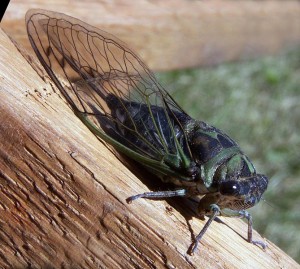
CicadasCicadas are bizarre, especially the “periodical cicadas” that live only in eastern North America. What’s odd about them is that they’re on either a 13- or a 17-year cycle. They emerge in “broods” of so many bugs it’s like some shock-and-awe insect invasion, make a lot of deafening noise, mate, lay eggs, and, within just a few weeks, die. Then they disappear again for an another exact number—13 or 17—of years. Entomologists are still trying to figure out what makes periodical cicadas tick. The main problem: those long cycles. It’s difficult for scientists to study an insect that shows up only once or twice in their careers. The name cicada is Latin for “tree cricket,” which is actually incorrect: cicadas are not crickets. And though one species is commonly called the “17-year locust,” they’re not locusts, either. Locusts are “eating machines” that can devour entire crops. Cicadas don’t eat leaves; they’re sapsuckers, like their closest relatives leafhoppers and spittlebugs. Cicadas have also been called “jar flies,” “harvest flies,” and “dust flies,” but their Australian nickname, “galang-galang,” which echoes the racket they make, may be the most fitting.

Funny Hall of Fame: ‘Poodles’ are Actually Coiffed Ferrets on Steroids

Move over, old Funny Hall of Fame, there’s a new kid (ferret) in town:

Gullible bargain hunters at Argentina’s largest bazaar are forking out hundreds of dollars for what they think are gorgeous toy poodles, only to discover that their cute pooch is in fact a ferret pumped up on steroids.

One retired man from Catamarca, duped by the knock-down price for a pedigree dog, became suspicious he had bought what Argentinians call a ‘Brazilian rat’ and when he returned home took the ‘dogs’ to a vet for their vaccinations.

Imagine his surprise when his suspicious were confirmed – he had in fact purchased two ferrets that had been given steroids at birth to increase their size and then had some extra grooming to make their coats resemble a fluffy toy poodle.

Japanese Scientists “Read Dreams” Via MRI Scans

Holy cow:

In the study, published in the journal Science, researchers at the ATR Computational Neuroscience Laboratories, in Kyoto, western Japan, used MRI scans to locate exactly, which part of the brain was active during the first moments of sleep.

They then woke up the dreamer and asked him or her what images they had seen, a process that was repeated 200 times. These answers were compared with the brain maps that the MRI scanner produced.

Researchers were then able to predict what images the volunteers had seen with a 60 per cent accuracy rate, rising to more than 70 per cent with around 15 specific items including men, words and books, they said.

Billboard in Peru Turns Air Into Drinking Water

No way. (Way!)

Just outside Lima, Peru, a billboard provides drinking water to whomever needs it – mainly, its neighbours.

The panel produces clean water from the humidity in the air, through filters.

Researchers at the University of Engineering and Technology (UTEC) in Lima and advertising agency Mayo Peru DraftFCB joined forces to launch it.

So far it’s made more than 9,000 liters of water – or about 96 liters a day. And it goes into a storage vat that has a tap at street level – so nyone can go up to it and get some water. And they need it, because, even though it’s very humid there (up to 98% humidity in the mornings! ow!), it hardly rains at all! Check this out:

Humans Have Left the Solar System (Or Not)

.
And no, this is not about Charlie Sheen.

Ba DUMP.

Thank you, no really, thank you! Try the gharghmey!

Where were we? Oh yeah: Humans have left the Solar System! (Okay, they say “may have left,” but dangit, we’re not scientists, Jim!)

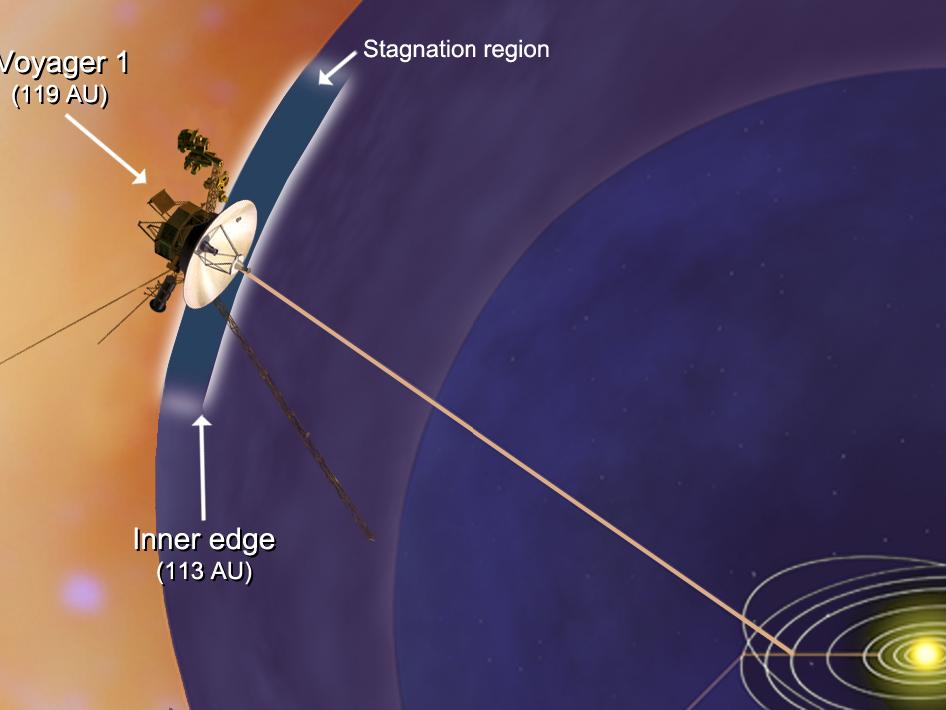
NASA’s Voyager 1 spacecraft — the farthest-flung object created by human hands — has traveled beyond the sun’s sphere of influence and may even have left the solar system forever, a new study suggests.

On Aug. 25, 2012, 35 years after the Voyager 1 mission launched, Earth’s most distant spacecraft detected a sharp change in the intensity of fast-moving charged particles called cosmic rays, suggesting it had left the outermost reaches of the heliosphere marking the edge of the solar system.

“Within just a few days, the heliospheric intensity of trapped radiation decreased, and the cosmic ray intensity went up as you would expect if it exited the heliosphere,” said Bill Webber, professor emeritus of astronomy at New Mexico State University in Las Cruces, in a statement.

Here’s a helpful graphic from NASA:

Well, sorta helpful. Nice colors, anyway.

And hold up – NASA says, Not so fast:

Meteorite Hits Frozen Lake? And a Joke

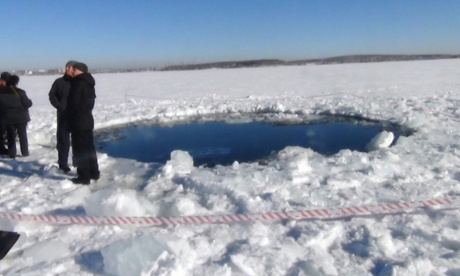
The Guardian has a great – and large – collection of videos, photos, and reports from news media and just regular folks on the wild meteor event that occurred in Russia last night. Including this shot:

Space.com says it was the largest meteor event in 100 years. The blast: it was more powrful than that produced by the nuclear weapon detonated by North Korea the other day. (Wow!)

NASA says, based on very preliminary data, the meteor was almost 50 feet in circumfrence:

Based on the duration of the event, it was a very shallow entry. It was larger than the meteor over Indonesia on Oct. 8, 2009. Measurements are still coming in, and a more precise measure of the energy may be available later. The size of the object before hitting the atmosphere was about 49 feet (15 meters) and had a mass of about 7,000 tons.

The meteor, which was about one-third the diameter of asteroid 2012 DA14, was brighter than the sun. Its trail was visible for about 30 seconds, so it was a grazing impact through the atmosphere.

But here’s what we want to note: